Understanding Structural Steel Installation
What is Structural Steel Installation?
Structural steel installation involves the process of erecting steel frameworks required for various types of buildings and other construction projects. This critical aspect of construction includes setting up beams, columns, trusses, and other steel elements that will support a structure’s weight and maintain its integrity over time. Typically, structural steel is prefabricated in a factory, then transported to the site where it is assembled into a cohesive form, providing durability and resilience.
Importance in Construction Projects
The significance of structural steel installation cannot be overstated in the realm of construction. Buildings constructed with steel frames are often more resilient to environmental stresses, including high winds, earthquakes, and other natural forces. In addition, the strength-to-weight ratio of steel allows for greater design flexibility and larger open spaces inside buildings without the need for supporting walls. This attribute enables architects and engineers to create innovative designs while ensuring safety and longevity.
Common Materials Used
The primary material used in structural steel installation is steel itself, often in the form of various grades such as carbon steel, alloy steel, or stainless steel. Components such as steel beams, columns, rebar, and steel plates are the backbone of structural integrity. Other materials often involved in the process include:
- Bolts and Connectors: Used for securing various steel pieces together.
- Welds: Provide a strong structural connection between steel components.
- Coatings: Protective layers applied to prevent rust and corrosion.
- Insulation Materials: Used in conjunction with steel to improve energy efficiency.
Pre-Installation Considerations
Site Preparation and Planning
Before any actual installation occurs, substantial groundwork is essential to ensure successful outcomes. Effective site preparation involves several stages, each critical to the overall project. They include:
- Clearing the Site: Removing any debris, vegetation, or obstacles that might interfere with the installation process.
- Soil Assessment: Evaluating the soil conditions to determine if additional foundation work is needed.
- Site Layout: Using blueprints to accurately mark the locations for steel components.
Inspection and Quality Control
Structural steel installationmust adhere to stringent quality standards. Regular inspections during the pre-installation phase can prevent significant issues later on. Quality control measures may include:
- Material Inspection: Verifying that all steel components meet specified grade and standards.
- Welding Inspections: Checking the integrity of welds before progression to ensure they meet safety specifications.
- Documentation Review: Ensuring all necessary permits and designs conform to regulations.
Essential Tools and Equipment
Successful structural steel installation relies heavily on the right tools and equipment. Among the most critical are:
- Cranes: Used for lifting heavy steel components into place.
- Forklifts: Helpful for moving materials around the site.
- Welding Equipment: Essential for permanent connections between steel pieces.
- Safety Gear: Includes helmets, gloves, harnesses, and more to ensure the safety of workers on site.
Step-by-Step Guide to Structural Steel Installation
Initial Setup and Erection Process
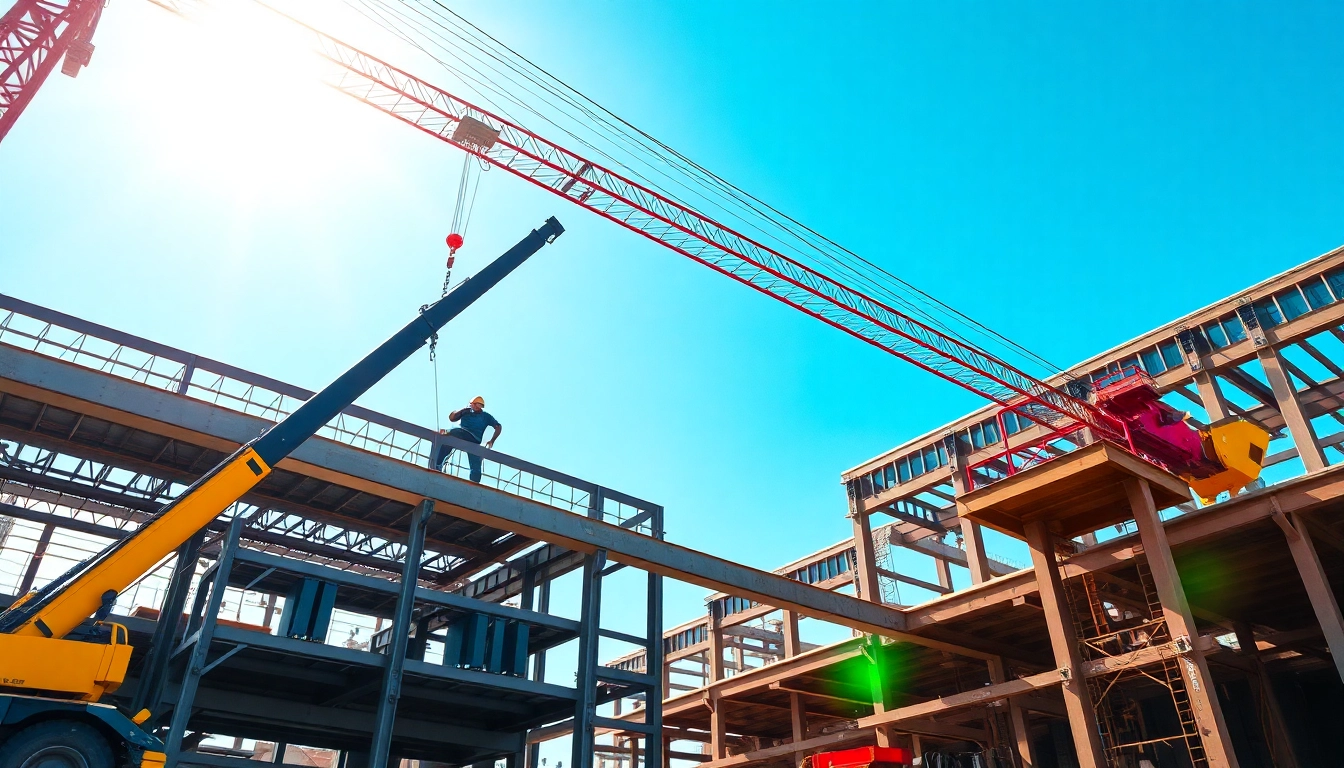
The actual installation begins with the erection of the steel structure, which typically follows these steps:
- Base Plate Installation: Positioning and securing base plates, often bolted to the foundation to ensure stability.
- Column Erection: Vertical steel columns are lifted and placed onto base plates. Accurate alignment is critical.
- Beam Placement: Connecting horizontal beams to columns to create the framework of the structure.
- Bracing Installation: Additional steel members are added for lateral stability and rigidity.
Securing Steel Structures
After the basic framework is erected, securing the structure involves several processes:
- Snugging Bolts: Tightening bolts to ensure structural integrity without introducing undue stress.
- Welding Connections: Completing welds as required by design specifications to create permanent bonds.
- Safety Checks: Conducting thorough inspections during and after installation to ensure all connections are secure.
Final Adjustments and Safety Checks
The final phase of structural steel installation involves a comprehensive series of adjustments and safety verifications:
- Alignment and Leveling Checks: Ensuring all components are correctly aligned and level.
- Load Testing: Stress testing parts of the framework to verify safety and performance.
- Final Inspection: A complete review of the installation for compliance with design specifications and safety standards.
Challenges in Structural Steel Installation
Handling Weather Conditions
Weather can significantly impact structural steel installations. Rain, snow, and high winds can delay progress and complicate safety. Measures to mitigate these challenges include:
- Weather Monitoring: Using forecasts to plan work schedules around adverse conditions.
- Protective Canopies: Installing temporary canopies during inclement weather.
- Postponement Policies: Establishing clear guidelines for halting work in dangerous conditions.
Safety Risks and Mitigation
With the inherent dangers of construction work, understanding and addressing safety risks is crucial. Common safety risks during structural steel installation include falls, equipment-related injuries, and exposure to hazardous materials. Effective mitigation strategies comprise:
- Safety Training: Providing rigorous training for all team members on safety protocols.
- Fall Protection Systems: Implementing guardrails, safety nets, and harnesses to protect workers.
- Regular Safety Audits: Conducting frequent safety checks and drills to ensure compliance with safety regulations.
Resolving Common Installation Issues
Occasionally, even in well-planned projects, challenges can arise during installation. These may include unanticipated obstacles, material shortages, or equipment failures. Addressing these issues might involve:
- Contingency Planning: Establishing backup plans for equipment and labor shortages.
- real-time Communication: Maintaining clear lines of communication among team members to quickly address issues as they arise.
- Collaborative Problem-Solving: Engaging team members in brainstorming sessions to find effective solutions.
Future Trends in Structural Steel Installation
Innovative Techniques and Technologies
The construction industry continues to evolve with the introduction of innovative techniques and technologies that enhance the efficiency and precision of structural steel installation. These advancements might include:
- BIM Technology: Building Information Modeling (BIM) provides real-time data and visualization, assisting in planning and coordination.
- 3D Printing: Components can potentially be produced offsite using 3D printing technology, streamlining the supply chain.
- Advanced Robotics: Automation in the lifting, placing, and securing of steel components can reduce labor costs and improve safety.
Eco-Friendly Practices
As sustainability becomes vital in construction, practices in structural steel installation are adapting to reduce environmental impact. This may involve:
- Recycling Scrap Steel: Repurposing scrap material to minimize waste and reduce the need for new materials.
- Energy Efficiency: Utilizing energy-efficient welding and manufacturing processes in steel production.
- Green Certifications: Pursuing LEED or similar certifications that promote sustainable building practices.
Impact of Automation on Installation
Automation is reshaping the landscape of structural steel installation. The incorporation of technology such as drones, automated bolting systems, and real-time monitoring tools serves to streamline processes and enhance safety. These advancements lead to:
- Increased Accuracy: Drones can provide aerial views for precise counter-checks on alignment and progress.
- Reduced Labor Dependency: Automation diminishes the reliance on manual labor, which can be beneficial in labor-short markets.
- Enhanced Documentation: Automation tools can assist in maintaining detailed records of installation processes for better quality control.